
Apple Helps Airlines Track Lost Bags with New Feature
Apple has introduced a new feature called Share Item Location to help airlines find missing suitcases and AirTags quickly using secure web links.
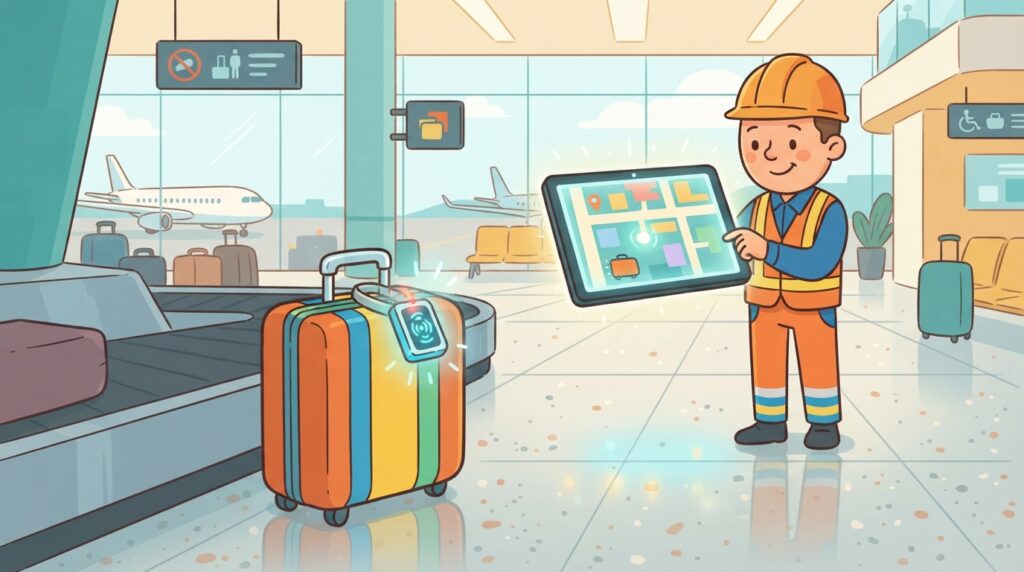
Have you ever stood beside an airport conveyor belt with your family, waiting eagerly for your colourful suitcase to appear? On 11 November 2024, technology company Apple, based in Cupertino, California, announced a helpful new feature called Apple Share Item Location to make sure misplaced luggage finds its way back home.
This smart tool is built into Apple’s Find My network and helps travellers share the whereabouts of their belongings with airline staff. If a suitcase goes missing during a journey, passengers can now help airport teams locate it much faster than ever before.
What happened?
Apple introduced this location-sharing feature in the public beta version of its iOS 18.2 software update. It will soon roll out generally for iPhone Xs and newer models across the world. The tool allows a user to generate a temporary, private link inside the Find My app on an iPhone, iPad, or Mac.
This secure link shows the exact spot of an AirTag or compatible tracker on an interactive map. Anyone helping to find the suitcase can open the link inside an everyday web browser, even if they do not own an Apple device. This means airport customer service staff can view the bag’s location on their computer screens in a matter of seconds.
To make this work smoothly around the globe, Apple partnered with more than 15 major airlines. These include popular carriers such as Singapore Airlines, British Airways, Delta Air Lines, United Airlines, Qantas, Lufthansa, KLM, and Air Canada. United Airlines plans to introduce this system across its entire customer service network in early 2025.
An air transport technology company called SITA is also bringing this feature into its system named WorldTracer. WorldTracer is already used by more than 500 airlines and ground handlers across over 2,800 airports worldwide.
Keeping personal data safe is a top priority for this system. Only approved staff can view the map, and they must authenticate themselves with an Apple Account or a verified partner email address. The tracking link automatically turns off the moment the owner is reunited with the item, and it will expire after seven days if not cancelled earlier. Eddy Cue, Apple’s Senior Vice President of Services, explained that the tool directly connects passengers with airlines while keeping user privacy strictly protected.
Why does it matter to you?
Going on a holiday during school vacations is one of the most exciting parts of the year. Whether you are flying across India to visit your grandparents or going on an overseas trip, packing your favourite books, clothes, and games takes a lot of care.
Losing a bag at a busy terminal can cause a lot of worry and disrupt a family holiday. With smart trackers and location sharing, airlines can spot a misplaced bag in a massive cargo hold or connecting terminal before the flight leaves. It is also a brilliant real-world example of how tiny electronic sensors, wireless networks, and safe computer programmes work together to solve everyday travel problems.
Words to know
- AirTag: a small, coin-shaped tracking device made by Apple that helps locate personal belongings.
- Public beta: an early version of a software programme released to the public so people can test it before the official launch.
- Authenticate: to prove your identity by logging in with approved account details or passwords.
- Interactive map: a digital map on a screen that you can zoom into, move around, and click on.
Did you know?
The WorldTracer baggage-tracking system is currently utilised by over 500 airlines and ground handlers across more than 2,800 airports globally!
Think about it
If you had a smart tracker, which of your personal items would you attach it to, and why? How do you think wireless technology will change the way we travel in the future?
Quick quiz
How long does the Apple Share Item Location link stay active if it is not cancelled earlier?
- Seven days
- One month
- Twenty-four hours
See the answer
Seven days
Sources
This story was prepared by the Kids Gazette news desk with the help of AI research and writing tools, using the sources listed above.