New Deep-Sea Shark Found in Kerala Waters!
Indian scientists have identified a brand-new deep-sea shark species called the Indian Bramble Shark, swimming right off the coast of Kerala.
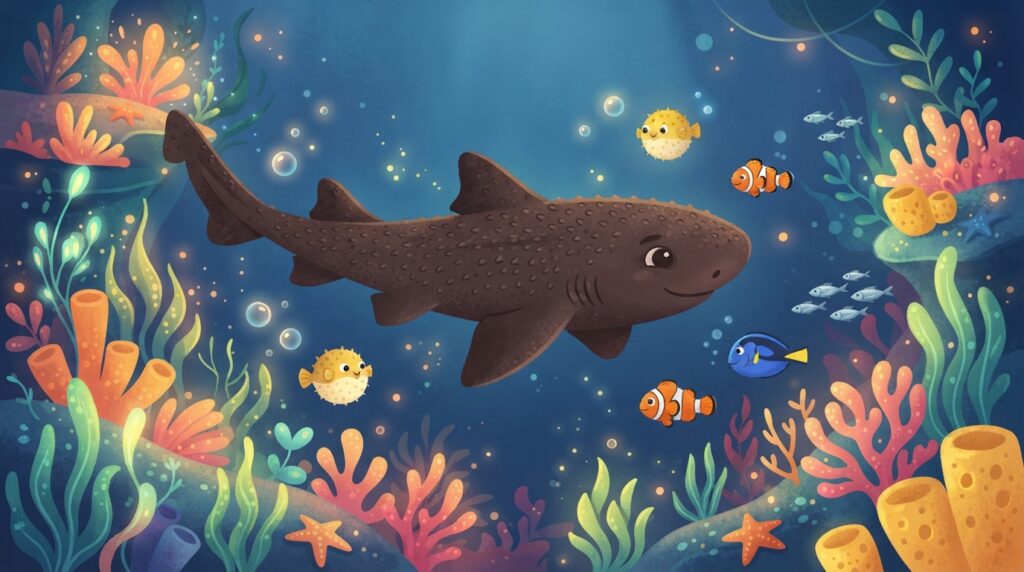
Exciting news has arrived from beneath the ocean waves! On 11 November 2026, researchers announced that a new shark species discovered in the Indian Ocean has been officially identified. This fascinating ocean creature is called the Indian Bramble Shark, known to scientists as Echinorhinus roinee.
The wonderful discovery was made by a team of researchers from the Zoological Survey of India (ZSI) and the ICAR-Central Marine Fisheries Research Institute (ICAR-CMFRI). They studied specimens brought into Sakthikulangara Fishing Harbour in the Kollam district of Kerala, where the sharks had arrived as deep-sea trawler bycatch.
What happened?
For several decades, people did not realise this shark was completely unique. Marine biologists had mistakenly identified it as the Atlantic bramble shark, or Echinorhinus brucus. However, careful new research showed that this Indian Ocean dweller has its own special features. The team published their complete scientific findings in the journal Records of the Zoological Survey of India (Volume 126, Issue 1S, 2026).
The Indian Bramble Shark is an impressive fish that can grow up to three metres in length. It has a dark brown to blackish body covered in sharp, thorn-like scales called dermal denticles. As the shark grows older and matures, these prickly scales fuse together to create distinct, multi-pointed armoured plates across its skin.
When scientists examined its body structure, they discovered that it has larger eyes, larger pelvic fins, and a longer snout-to-gill region than its closest relatives. The researchers also used a modern laboratory method called mitochondrial DNA barcoding. This genetic testing proved that Echinorhinus roinee forms its very own Indian Ocean family branch. That makes it only the third known bramble shark species in the entire world! Similar genetic records show that this shark’s ocean territory extends beyond Indian waters toward Oman, Sri Lanka, and Thailand.
Why does it matter to you?
If you live near the coast in India or have visited beaches in Kerala, you might look out at the water and picture familiar fish like sardines or mackerel. This discovery proves that the deep sea right next to India is still packed with mysterious animals waiting to be explored.
Marine experts, including Dr. Bineesh K. K. of ZSI Chennai, pointed out that knowing the exact identity of ocean species is vital for deep-sea biodiversity protection and sustainable fisheries management. When Indian scientists use modern tools to understand ocean life, it helps our country take better care of rare creatures before they disappear.
Words to know
- bycatch: Unwanted fish and sea creatures caught accidentally by commercial fishing nets.
- dermal denticles: Tiny, tough, tooth-like scales that cover the skin of sharks.
- continental slope: The steep slope where the ocean floor drops down from shallow coastal waters to the deep abyss.
- DNA barcoding: A laboratory method that uses a short piece of genetic material to identify a specific animal species.
- lineage: A direct line of family descent showing how a group of living things is related over time.
Did you know?
The Indian Bramble Shark lives in pitch-black waters along the continental slope at depths between 350 and 450 metres, where its extra-large eyes help it see in the dark!
Think about it
How do you think animals survive in the deep ocean where sunlight cannot reach? What other hidden creatures might be swimming along India’s coastline right now?
Quick quiz
What happens to the thorn-like scales of the Indian Bramble Shark as it matures?
- They fall off completely
- They fuse together into multi-pointed armoured plates
- They change into soft fins
See the answer
They fuse together into multi-pointed armoured plates
Sources
This story was prepared by the Kids Gazette news desk with the help of AI research and writing tools, using the sources listed above.