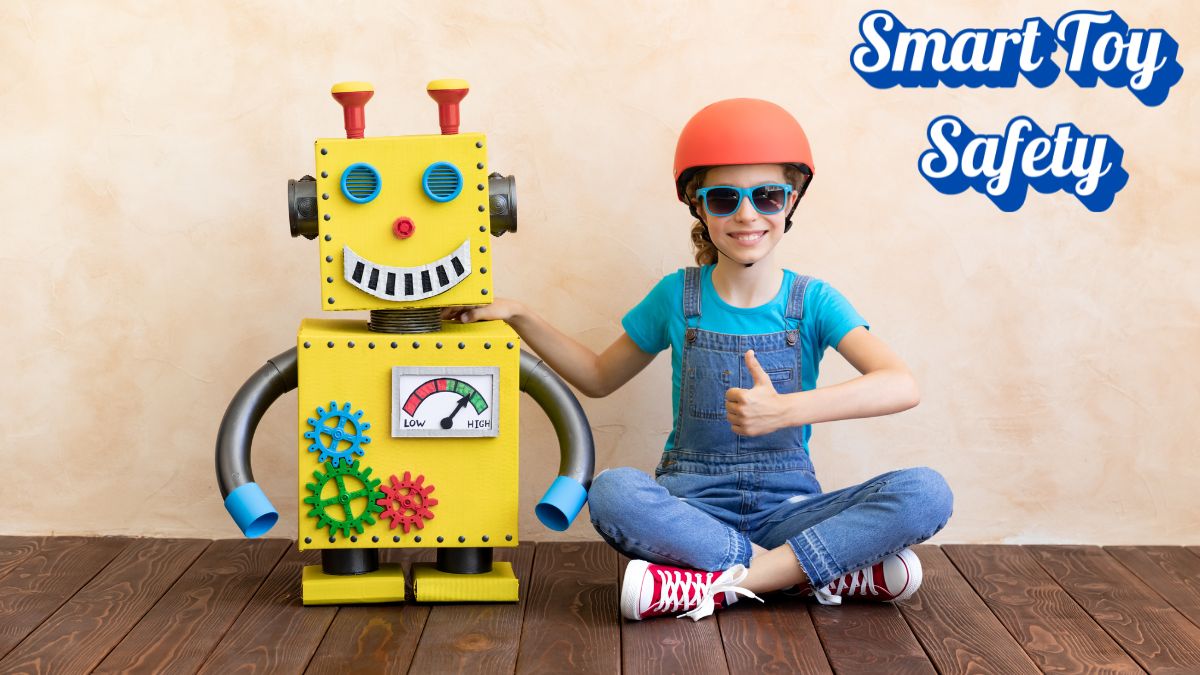
A teddy bear that answers questions. A doll that remembers your name. A car that talks back when you drive it. Welcome to the era of smart toys—where artificial intelligence meets childhood play. These gadgets can sing, teach, and even hold conversations. But as playtime gets smarter, so do the risks. Experts warn that connected toys, while exciting, raise new questions about privacy, data security, and child safety.
The global smart toy market is booming. Analysts estimate it will cross USD 25 billion by 2026, driven by demand for learning-based and interactive play products. In India, brands like Plugo, Miko, and Smartivity have made educational robots and app-linked toys popular among middle-class families. These toys promise to make learning fun, blending play with problem-solving.
Parents love the convenience. A talking puzzle can teach vocabulary. A coding toy can introduce logic and math. Some even track a child’s progress and send updates to a parent’s phone. But beneath the charm of blinking lights and cheerful voices lies an invisible system—one that collects data, records conversations, and connects to cloud servers.
Cybersecurity experts caution that every internet-connected toy is also a potential digital window into a child’s world. “Smart toys are mini-computers with microphones,” says ethical hacker Rohit Sinha. “If they’re not secured properly, they can be hacked like any device.” In several countries, toy companies have faced legal action for storing children’s voice recordings without consent.
In 2024, a global toy manufacturer faced backlash after its talking doll accidentally shared private voice data through unsecured servers. While no harm occurred, the incident exposed a key problem: many toys collect far more data than parents realize. Even harmless information—like a child’s name, location, or daily habits—can be sensitive if accessed by strangers.
India’s new Digital Personal Data Protection Act (DPDPA) 2023 recognizes children as a vulnerable group. It requires parental consent for any data collected from users under 18. But enforcement remains tricky, especially when toys are imported from multiple countries.
Parents can take practical steps to protect their children’s privacy. Experts recommend choosing toys from trusted brands that clearly mention data-handling policies. Always check if the toy connects to Wi-Fi or Bluetooth, and disable features not in use. Updating firmware regularly also prevents hacking. Most importantly, children should be taught to treat smart toys like digital friends—not real ones. They must learn not to share personal details, even during play.
Psychologists add another layer of concern: emotional attachment. Smart toys can mimic empathy through pre-programmed responses. They “listen” when a child is sad and “reply” with comforting words. While this can be helpful for lonely or shy children, over-reliance on digital comfort may reduce real emotional interaction. “Children learn empathy by observing people, not programs,” says child behavior expert Dr. Alka Mehta. “Technology can assist, but not replace, human connection.”
For schools integrating AI-based toys in early education, balance is key. Teachers must ensure these tools encourage creativity, not dependency. Many preschools now use “tech rotation” policies—mixing digital play with traditional blocks, drawing, and outdoor activities.
Another growing concern is voice data storage. Some AI toys use speech recognition to improve accuracy. They record snippets of conversation to analyze pronunciation or response time. Though often anonymized, parents should confirm whether such recordings are stored locally or on remote servers.
A recent UNICEF report on Children in a Digital World highlights that 72% of parents globally feel uncertain about managing their child’s data privacy. The report urges toy companies to build child-safe AI systems with transparency, limited data collection, and strong encryption.
Smart toys can indeed make learning joyful. Coding robots teach logic. Interactive books help with reading. Music toys boost rhythm and coordination. But the line between “helpful” and “harmful” depends on awareness. The same AI that teaches a child to count can also record their words. The same Bluetooth speaker that tells stories can, if hacked, reveal information.
Parents don’t have to fear technology—they just need to stay one step smarter than the toy. A few simple habits make all the difference:
– Turn off internet connectivity when not required.
– Avoid toys with built-in cameras for very young children.
– Use parental controls on companion apps.
– Read privacy statements before activating new features.
Families can also turn this into a learning opportunity. Older children can be shown how AI works—how toys “listen,” “learn,” and “respond.” When children understand the logic behind their digital playthings, they become better at using them responsibly.
At its best, technology can empower children to explore, imagine, and learn. But as every parent knows, curiosity comes with responsibility. Smart toys are here to stay. The challenge is not to disconnect from them—but to connect wisely.
As one mother at a Delhi parenting workshop put it, “We teach our kids not to talk to strangers. Now we must teach them not to overshare with smart toys.”
Playtime has always been magical. The goal is to keep it that way—fun, safe, and full of wonder, not worry.