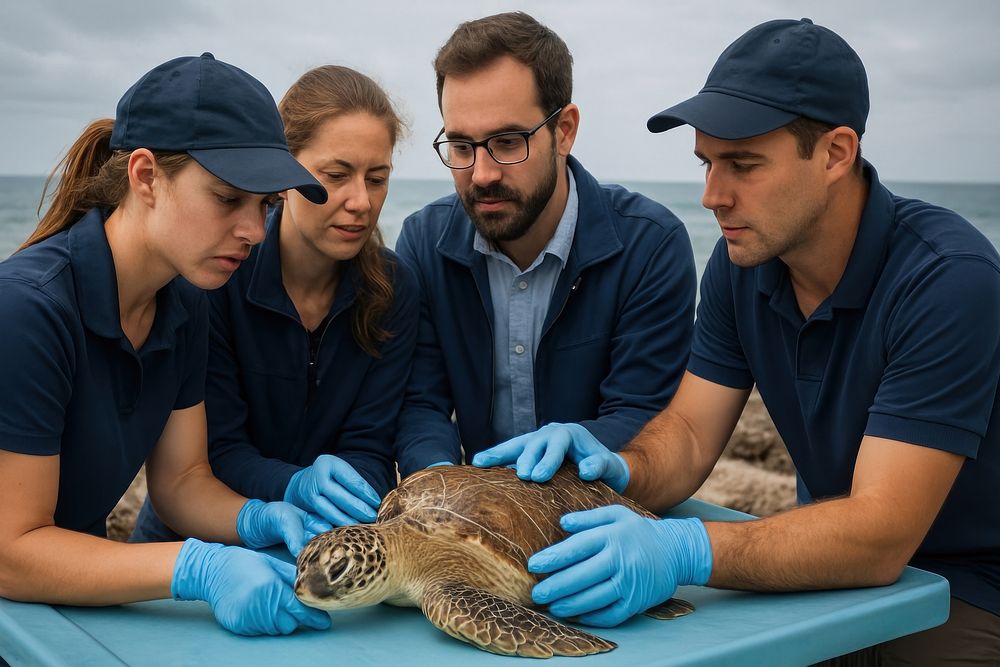
Marine biologists and ocean scientists are explaining how sea turtles travel thousands of kilometres across oceans, making this an exciting ocean and marine life news story for children. Sea turtles are ancient reptiles that have lived on Earth for more than 100 million years, and experts say their long-distance journeys are one of nature’s greatest mysteries.
Sea turtles hatch from eggs laid on sandy beaches. After hatching, baby turtles quickly move toward the sea. Scientists explain that even at a young age, sea turtles begin long ocean journeys that can last for years.
One of the most fascinating facts about sea turtles is their ability to navigate. Experts believe sea turtles use Earth’s magnetic field like a natural compass. This helps them find their way across vast oceans and return to the same beach where they were born to lay eggs.
Sea turtles travel long distances to find food and safe nesting areas. Some species migrate between feeding grounds and breeding beaches that are thousands of kilometres apart. Scientists track turtles using special satellite tags to study their routes and understand their behavior.
For kids, this news matters because sea turtles are important to ocean ecosystems. They help maintain healthy seagrass beds and coral reefs. By eating jellyfish and other sea creatures, they help balance marine life populations.
However, sea turtles face many dangers. Pollution, plastic waste, fishing nets, and climate change threaten their survival. Experts explain that plastic bags in the ocean can look like jellyfish, which turtles may accidentally eat.
Marine biologists are working to protect sea turtles by creating safe nesting areas and reducing plastic pollution. Conservation groups also rescue injured turtles and release them back into the sea after treatment.
Schools teach children about sea turtle conservation through environmental education programs. Students learn how small actions, such as reducing plastic use and keeping beaches clean, can help protect marine animals.
Parents and teachers encourage children to respect wildlife and avoid disturbing nesting sites. Even simple steps like properly disposing of waste can make a difference.
Scientists continue to study how climate change affects turtle nesting. Rising temperatures can change the gender balance of hatchlings, as sand temperature influences whether turtles are born male or female.
Sea turtles remind people of the wonders of nature. Their long journeys show how animals adapt and survive in changing environments.
The study of sea turtles shows the importance of protecting oceans and wildlife. By understanding how sea turtles travel and survive, children learn about conservation and environmental responsibility. These gentle ocean travelers inspire curiosity and remind everyone that protecting nature helps preserve amazing creatures for future generations.