Nature is one of the greatest teachers we can ever have. Long before there were schools, books, or computers, people learned by observing the world around them. The changing seasons, flowing rivers, growing trees, singing birds, and shining stars all have valuable lessons to teach. When children spend time in nature, they not only enjoy its beauty but also develop important qualities such as curiosity, patience, responsibility, and respect for all living things.
Every part of nature teaches a different lesson. A tiny seed reminds us that great things often begin with small steps. A tree teaches patience because it takes years to grow strong and provide shade and fruits. A river teaches perseverance as it continues flowing despite obstacles in its path. Even the sunrise reminds us that every new day brings fresh opportunities and hope.
Nature also encourages observation and scientific thinking. Children who watch butterflies, birds, insects, or growing plants begin to ask questions about how living things survive and interact. They learn about food chains, pollination, ecosystems, and the importance of protecting biodiversity. These real-life experiences make science exciting and meaningful.
Spending time outdoors has many health benefits. Fresh air, sunlight, and physical activity improve fitness, strengthen the immune system, and reduce stress. Children who regularly visit parks, gardens, or forests are often happier, more energetic, and better able to concentrate in school. Nature provides a peaceful environment where young minds can relax and recharge.
Nature also teaches responsibility. When children care for a garden, water plants, or feed birds, they understand that every living creature depends on care and attention. These simple activities develop kindness, patience, and a sense of duty. A child who learns to care for a small plant today is more likely to care for the environment tomorrow.
Another valuable lesson from nature is teamwork. Ants work together to gather food, bees cooperate to build hives, and birds fly in groups during migration. These examples show children that cooperation and teamwork help achieve goals that would be difficult to accomplish alone. Nature demonstrates that every individual has an important role to play.
Parents can encourage children to connect with nature through simple activities such as nature walks, gardening, bird watching, or camping. Instead of spending every weekend indoors, families can visit parks, lakes, botanical gardens, or wildlife sanctuaries. These experiences create lasting memories while helping children appreciate the beauty and importance of the natural world.
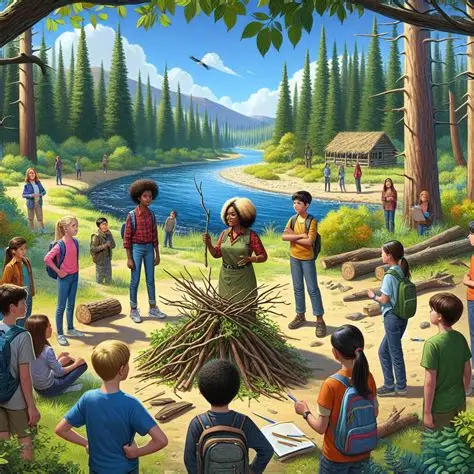
Schools can also make nature a part of everyday learning. Outdoor science lessons, tree plantation drives, kitchen gardens, and environmental projects encourage students to observe, explore, and learn through experience. Such activities develop environmental awareness and inspire children to become responsible guardians of the Earth.
In today’s technology-driven world, children often spend more time looking at screens than looking at the sky. While technology is useful, it should never replace the valuable lessons that nature offers. A balance between digital learning and outdoor experiences helps children grow into healthy, creative, and thoughtful individuals.
As the famous naturalist John Muir said, “In every walk with nature, one receives far more than he seeks.” By encouraging children to observe, respect, and learn from nature, we help them develop wisdom, compassion, and a lifelong appreciation for the environment. Nature is not only our home—it is also our greatest classroom, where every tree, flower, river, and bird has a lesson waiting to be discovered.