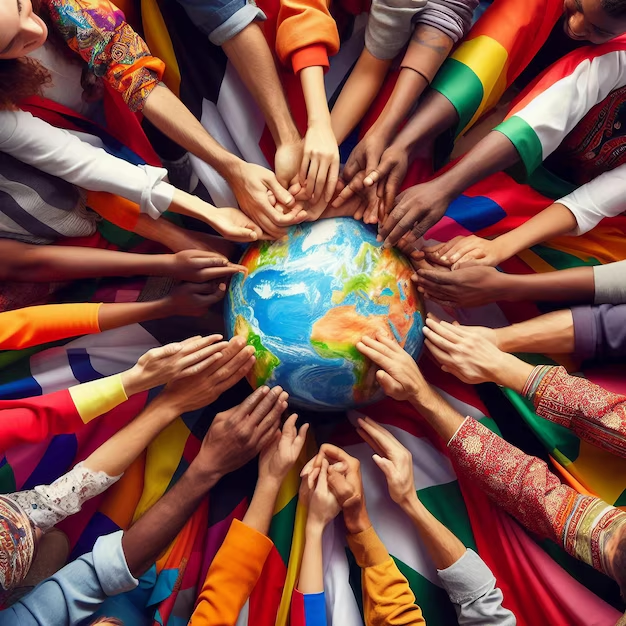
Learning to appreciate different cultures is an important life skill that helps students become respectful, open-minded, and responsible global citizens. Every country and community has its own language, traditions, food, clothing, music, festivals, and customs. These differences make our world colorful and interesting.
Sometimes, people may not understand traditions that are different from their own. Instead of making fun of others, students should learn with curiosity and respect.
When students appreciate different cultures, they develop kindness and understanding.
For students, this matters because they meet people from different backgrounds in school, sports, and later in their careers.
Students can learn about the festivals, history, and traditions of different countries.
They can read books and watch educational programs that introduce cultures from around the world.
This helps in building knowledge and respect.
Teachers encourage students to celebrate cultural diversity through school activities and projects.
Learning about different cultures improves communication and friendship.
Students who practice this habit often become more confident in meeting new people.
Parents can support this by introducing children to different foods, stories, music, and traditions.
Students should avoid making jokes about another person’s language, appearance, or customs.
This helps create an atmosphere of inclusion and respect.
Teachers explain that every culture has valuable lessons to share.
Students can participate in cultural exchange programs, exhibitions, and international events organized by their schools.
This helps in developing curiosity and global awareness.
Learning to appreciate different cultures also teaches empathy and tolerance.
Students who follow this habit become more accepting of different ideas and beliefs.
This habit improves teamwork and cooperation with people from diverse backgrounds.
Students can ask respectful questions when they want to learn about another culture.
Schools can organize cultural fairs where students share traditions from different regions and countries.
Communities become stronger when people celebrate diversity instead of fearing it.
Small acts of respect can build lifelong friendships.
Every culture contributes something unique to the world.
Students who appreciate different cultures often inspire others to value diversity and practice kindness.
By learning to appreciate different cultures, students can become respectful global citizens, build meaningful friendships, and develop the understanding needed to live peacefully in a diverse world.