Good manners are one of the greatest gifts parents and teachers can give a child. While academic knowledge helps children build successful careers, good manners help them build meaningful relationships and earn the respect of others. A child who is polite, respectful, and considerate leaves a positive impression wherever they go. Good manners are not simply about saying “please” and “thank you”; they reflect a person’s values, attitude, and character.
The journey of learning good manners begins at home. Children observe the behaviour of their parents and family members and often imitate what they see. When adults speak politely, show respect to elders, help neighbours, and express gratitude, children naturally learn to behave in the same way. Schools further strengthen these values by encouraging discipline, teamwork, honesty, and respect among students.
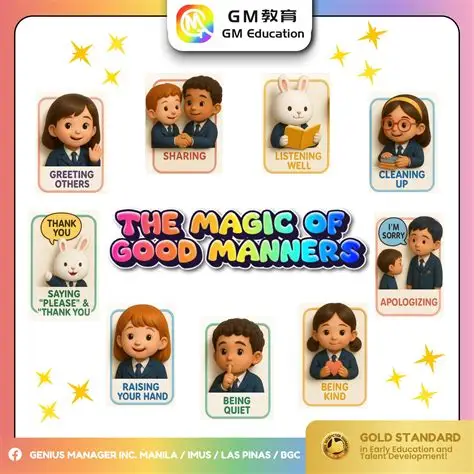
Simple habits such as greeting people with a smile, saying “Good Morning,” “Please,” “Sorry,” and “Thank You” may seem small, but they make a big difference. These words show kindness, appreciation, and humility. A polite child is more likely to make friends, work well with others, and earn the trust of teachers and classmates.
Respect is one of the most important aspects of good manners. Children should learn to respect their parents, teachers, grandparents, classmates, school staff, and even younger children. Respect also includes listening carefully when others are speaking, waiting patiently for one’s turn, and accepting different opinions without arguing or using rude language. These habits help create a peaceful and positive environment at home and in school.
Good manners also include honesty and responsibility. Children should be encouraged to tell the truth, admit their mistakes, and take responsibility for their actions. Saying “I’m sorry” when they make a mistake and making an effort to correct it teaches accountability and builds strong moral character. Honest behaviour earns the confidence and respect of others.
Helping others is another sign of good manners. Offering assistance to a friend, sharing classroom materials, helping an elderly person, or supporting someone in need reflects kindness and compassion. Small acts of kindness create a caring community and teach children that true success is measured not only by achievements but also by how we treat others.
In today’s digital world, good manners extend beyond face-to-face interactions. Children should learn digital etiquette by using respectful language online, avoiding cyberbullying, asking permission before sharing someone’s photographs, and thinking carefully before posting comments on social media. Being polite online is just as important as being polite in person.
Parents and teachers should remember that children learn best through example. Correcting behaviour with patience, appreciating good conduct, and consistently practising respectful communication help children develop these habits naturally. Praise for good manners encourages children to continue behaving positively.
Good manners also contribute to a child’s confidence. A well-mannered child feels comfortable speaking with adults, participating in school activities, welcoming guests, and representing the school during competitions and public events. These social skills become valuable assets throughout life, whether in higher education, the workplace, or the community.
Success is not measured only by intelligence or wealth. Character, kindness, honesty, and respect are equally important qualities that define a truly successful person. Good manners create strong relationships, open doors to opportunities, and leave lasting impressions wherever we go.
As the saying goes, “Manners cost nothing but earn everything.” By teaching children to be polite, respectful, honest, and compassionate, we are not only shaping good students but also responsible citizens and caring human beings. A child with good manners carries a treasure that will benefit them throughout their entire life.