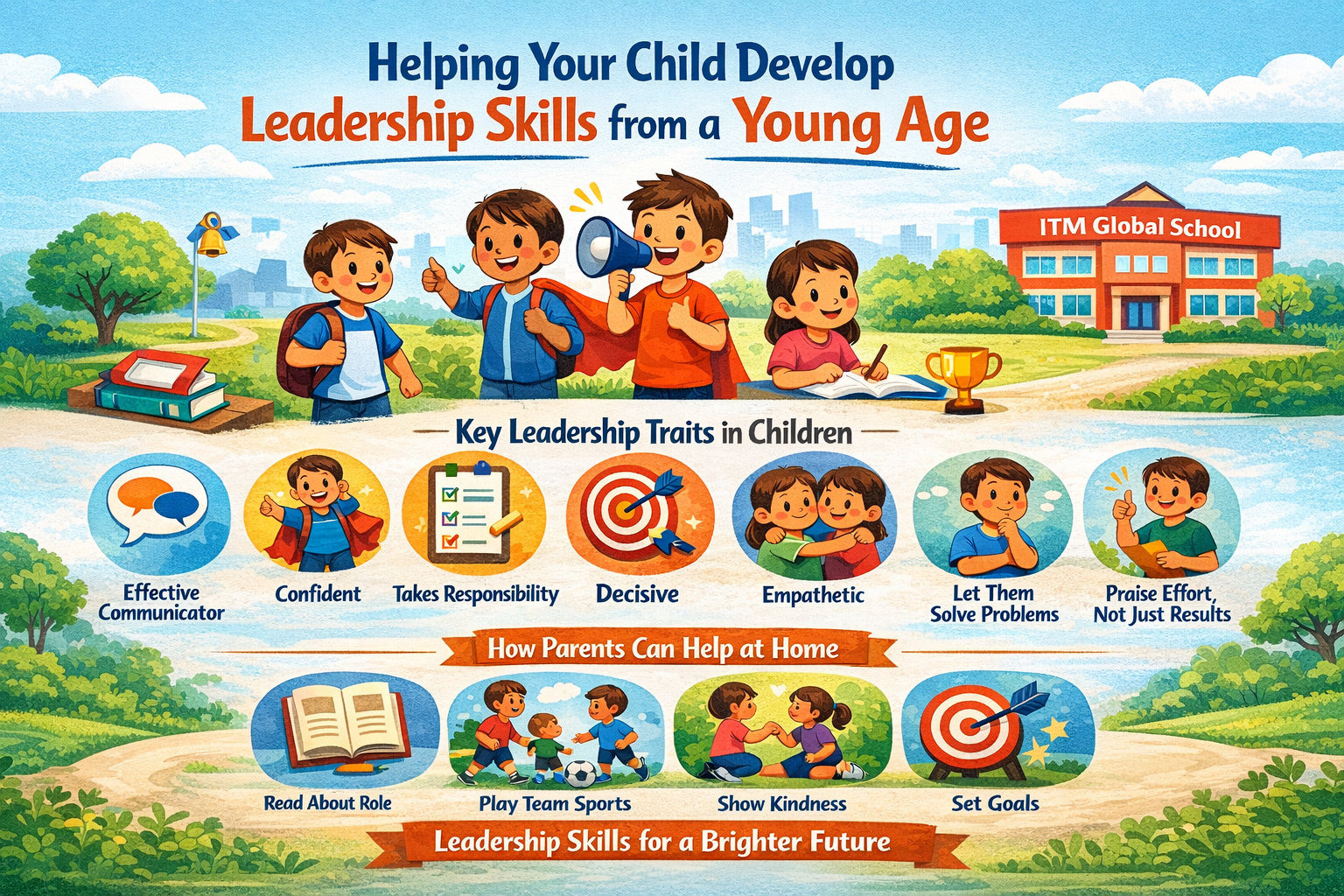
Leadership is not about being the most powerful person or giving orders to others. True leadership is about setting a good example, taking responsibility, making wise decisions, and inspiring others to achieve a common goal. Every child has the potential to become a leader, whether in the classroom, on the playground, at home, or in the community. By nurturing leadership skills from an early age, parents and teachers prepare children to become confident, responsible, and compassionate citizens.
A good leader begins by leading themselves. Children who are punctual, disciplined, honest, and responsible naturally earn the respect of others. Leadership starts with simple habits such as completing homework on time, following school rules, keeping promises, and treating everyone with kindness. These everyday actions build trust, which is the foundation of effective leadership.
Leadership also involves taking initiative. Instead of waiting for someone else to solve a problem, young leaders step forward with ideas and solutions. They volunteer to organize classroom activities, help teachers, guide younger students, or participate in community service projects. Such experiences teach children that leadership is about serving others rather than seeking attention or recognition.
An important quality of a good leader is the ability to listen. Great leaders respect the opinions of others and encourage everyone to participate. They understand that the best decisions are often made when different ideas are considered. Children should learn that listening carefully is just as important as speaking confidently.
Teamwork and leadership go hand in hand. A successful leader understands that every team member has unique talents and strengths. Instead of trying to do everything alone, they encourage cooperation, appreciate the efforts of others, and celebrate shared achievements. This creates an atmosphere of trust, motivation, and mutual respect.
Leadership also teaches children how to make responsible decisions. Every choice has consequences, and leaders must think carefully before acting. Whether resolving a disagreement between classmates or planning a school event, children should learn to consider fairness, honesty, and the well-being of everyone involved. Responsible decision-making builds character and earns the confidence of others.
Parents play an essential role in developing leadership qualities. Encouraging children to make simple decisions, take responsibility for household tasks, and solve everyday problems independently helps them become confident and self-reliant. Praising effort, responsibility, and good judgment motivates children to continue developing these qualities.
Schools provide many opportunities for leadership development. Student councils, house captain roles, sports teams, cultural events, debates, science exhibitions, and community service programmes allow children to practise leadership in real-life situations. These activities improve communication, organization, teamwork, and decision-making skills while building self-confidence.
Leadership also requires humility. A true leader never believes they know everything. They remain open to learning, accept constructive criticism, and admit their mistakes when necessary. Humility helps leaders build stronger relationships and encourages others to trust and respect them. Children should understand that leadership is a journey of continuous learning and self-improvement.
In the modern world, leadership is needed in every field, from education and science to business, healthcare, and public service. The leaders of tomorrow are the children of today. By teaching them values such as honesty, empathy, responsibility, courage, and service, we prepare them to lead with integrity and wisdom.
As the renowned leadership expert John C. Maxwell said, “A leader is one who knows the way, goes the way, and shows the way.” By encouraging children to lead through kindness, responsibility, and positive actions, we empower them to become individuals who inspire others and create meaningful change. Great leaders are not born—they are shaped by strong values, consistent effort, and a sincere desire to make the world a better place.