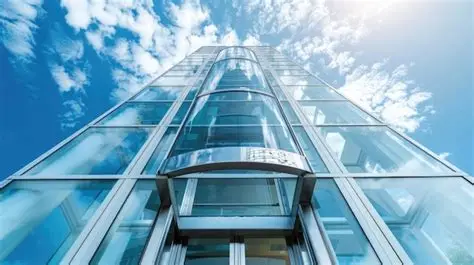
Have you ever wondered how people easily travel to the 20th, 50th, or even the 100th floor of a tall building? Climbing so many stairs every day would be exhausting and time-consuming. Thanks to one of the greatest engineering inventions—the elevator, also called a lift—people can move quickly and safely between floors in just a few seconds. Elevators have made it possible to build the tall skyscrapers that define modern cities. Without elevators, many of the world’s tallest buildings would not be practical.
An elevator is a machine designed to transport people and goods vertically between different floors of a building. It works using a combination of electric motors, steel cables, pulleys, and counterweights. These parts work together to move the elevator cabin smoothly and safely up and down.
The history of elevators dates back to ancient times. Historians believe that simple lifting platforms powered by people, animals, or water wheels were used in ancient Egypt and Rome. However, the modern elevator became possible in 1853 when an American inventor named Elisha Otis introduced an important safety device. His invention prevented the elevator from falling if the supporting cable broke. This safety brake gave people confidence to use elevators and completely changed the future of building construction.
Modern elevators are powered by electric motors. When a passenger presses a button, the elevator’s computer receives the request and moves the cabin to the correct floor. The motor turns a pulley connected to strong steel cables. A heavy counterweight balances the weight of the elevator cabin, reducing the amount of energy needed to move it. This clever design makes elevators both efficient and safe.
Safety is one of the most important features of every elevator. Modern elevators are equipped with multiple safety systems, including automatic brakes, emergency alarms, backup power supplies, door sensors, speed governors, and communication systems. If the doors detect an object or a person while closing, they automatically reopen to prevent accidents. Engineers regularly inspect elevators to ensure they remain safe for public use.
Today’s skyscrapers use high-speed elevators capable of travelling several metres per second. Some of the world’s fastest elevators can reach the top floors of very tall buildings in less than a minute. Advanced computer systems manage elevator traffic by grouping passengers travelling to similar floors, reducing waiting time and improving efficiency.
Not all elevators are used for carrying people. Freight elevators transport heavy goods in factories, shopping malls, hospitals, and warehouses. Hospitals use special elevators designed to carry patients on stretchers along with doctors and medical equipment. In airports and railway stations, elevators help elderly people, children, and travellers carrying luggage move comfortably between different levels.
Modern technology is making elevators even smarter. Artificial Intelligence and sensors can monitor elevator performance, predict maintenance needs, and reduce energy consumption. Some elevators now use touchless controls, allowing passengers to select floors without touching buttons. Others are connected to smartphone apps that call the elevator automatically before a person even reaches the lobby.
Scientists are also developing future elevator technologies. Some companies are designing elevators that can move sideways as well as vertically, making travel inside large buildings even more efficient. Researchers are exploring magnetic levitation technology, similar to high-speed trains, to create faster and smoother elevator systems for future skyscrapers.
Children can learn many scientific principles by studying elevators. Concepts such as gravity, balance, force, friction, electricity, and simple machines all work together to make elevators function safely. Building simple pulley models or experimenting with weights and counterbalances can help students understand these engineering concepts in an enjoyable way.
Elevators have also created exciting career opportunities. Mechanical engineers, electrical engineers, software developers, civil engineers, architects, technicians, and safety inspectors all contribute to designing, installing, and maintaining elevator systems. As cities continue to grow taller, the demand for skilled professionals in vertical transportation will continue to increase.
Beyond technology, elevators also teach us an important life lesson. Just as an elevator helps people rise to greater heights, education, hard work, discipline, and determination help individuals reach their goals. Success does not happen instantly—it requires careful planning, strong foundations, and continuous improvement, just like a well-designed elevator system.
As the famous inventor Henry Ford once said, “Coming together is a beginning; keeping together is progress; working together is success.” Every elevator is the result of teamwork between engineers, architects, electricians, programmers, construction workers, and safety experts. Their combined efforts allow millions of people to move safely every day. By learning about elevators, children discover how science and engineering solve everyday problems and make modern life more convenient. The next time you step into a lift, remember that behind those simple doors lies one of humanity’s most remarkable engineering achievements, quietly helping cities reach new heights.