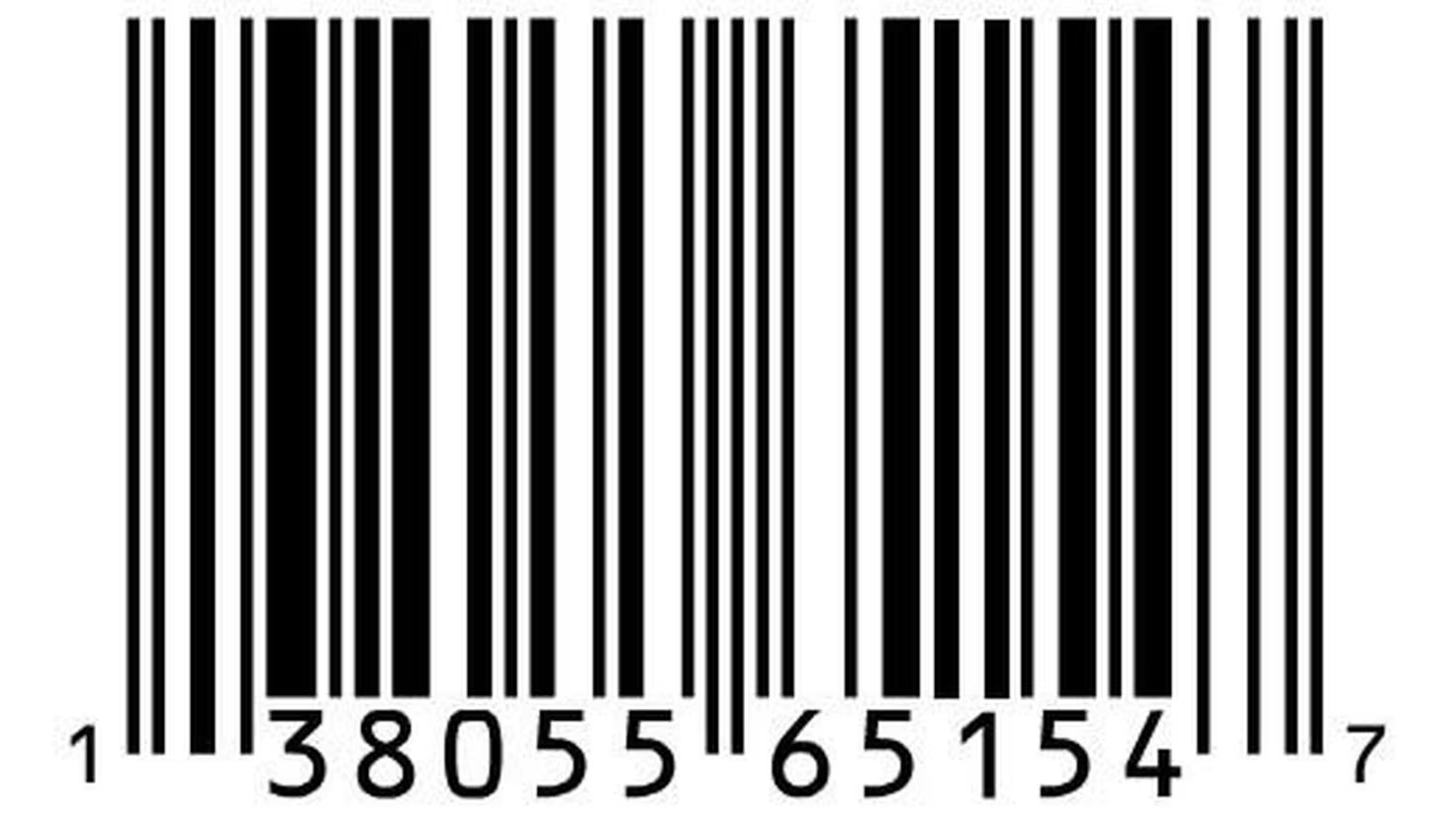
Every time you buy a book, a packet of biscuits, a bottle of milk, or even a school notebook, the cashier usually scans a small pattern of black lines printed on the product. Within seconds, the computer displays the product’s name, price, and other details. These black lines are called barcodes, and they have completely transformed the way businesses manage products and serve customers. Although barcodes may appear simple, they are one of the most useful inventions in modern commerce and technology.
A barcode is a machine-readable code made up of black bars and white spaces of different widths. Each pattern represents a unique number that identifies a specific product. Instead of typing product information manually, a barcode scanner reads the code instantly and sends the information to a computer. This process is fast, accurate, and reduces the chances of human error.
The idea of the barcode was developed in the late 1940s by two American inventors, Norman Joseph Woodland and Bernard Silver. They wanted to create a faster way to identify products in stores. After years of research and improvements, the first commercial barcode was scanned on 26 June 1974 in a supermarket in the United States. The product scanned was a packet of chewing gum. Since then, barcodes have become a standard part of businesses around the world.
A barcode works with the help of a barcode scanner. The scanner shines a beam of light onto the barcode. The black bars absorb the light, while the white spaces reflect it. A sensor inside the scanner detects this pattern and converts it into digital information that the computer understands. The computer then retrieves the product details stored in its database, such as the product name, price, manufacturer, and stock quantity.
Barcodes are used in many places besides supermarkets. Libraries use them to keep track of books, hospitals use them to identify medicines and patients safely, courier companies use them to track parcels, airlines use them on boarding passes, and factories use them to monitor products during manufacturing. Even school ID cards and event tickets often contain barcodes for quick identification.
One of the greatest advantages of barcodes is accuracy. Manually entering product information can lead to typing mistakes, but barcode scanning is much faster and more reliable. Businesses can also keep accurate records of their inventory, making it easier to know when products need to be restocked. This saves time, reduces waste, and improves customer service.
Today, many products also use QR codes (Quick Response codes), which are an advanced form of barcode. Unlike traditional barcodes that store only numbers, QR codes can store websites, contact details, maps, videos, and much more. By simply scanning a QR code with a smartphone, people can access information within seconds. QR codes became especially popular during the COVID-19 pandemic for digital payments, restaurant menus, and contactless services.
As technology continues to evolve, barcodes remain one of the simplest yet most powerful innovations in everyday life. They help businesses operate efficiently, improve accuracy, and save valuable time. They also demonstrate how a small invention can have a huge impact across industries worldwide.
As the famous inventor Thomas Edison said, “There is always a better way—find it.” The barcode is a perfect example of this idea. A few simple black lines have revolutionized shopping, transportation, healthcare, and countless other fields. By learning about barcodes, children discover that even the simplest inventions can solve big problems and improve the lives of millions of people. Innovation does not always have to be complicated—sometimes the smallest ideas make the biggest difference.