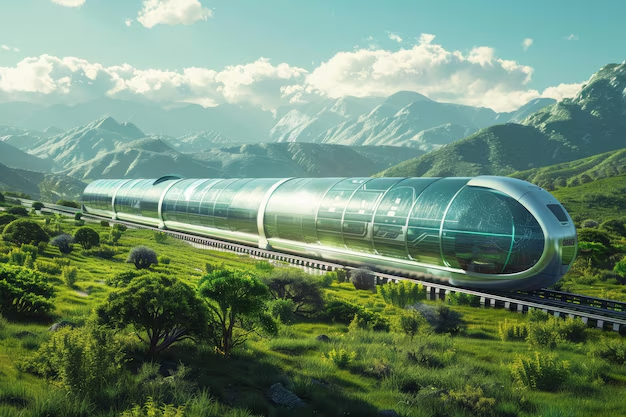
Engineers and transportation experts are developing high-speed trains to make travel faster and more environmentally friendly, making this an important science and transportation news story for children. High-speed trains are modern trains designed to travel much faster than traditional trains, helping people move between cities quickly and comfortably.
High-speed trains can travel at speeds of over 250 kilometers per hour. Scientists explain that these trains use powerful electric systems and specially designed tracks to maintain stability and safety at high speeds. Smooth tracks and advanced braking systems ensure passenger safety.
One of the main benefits of high-speed trains is reduced travel time. A journey that once took many hours by road can now be completed in much less time by rail. Experts say this improves business, tourism, and daily commuting.
For children, this news matters because transportation affects everyday life. Faster travel makes it easier for families to visit relatives, explore new places, and access opportunities. It also supports economic growth in different regions.
High-speed trains are also better for the environment compared to cars and airplanes. Since most high-speed trains run on electricity, they produce less pollution. Experts explain that when electricity comes from renewable energy sources, the environmental benefits are even greater.
Engineers carefully design train aerodynamics to reduce air resistance. The sleek, pointed shape of many high-speed trains helps them move smoothly through the air. Scientists say reducing friction improves efficiency and lowers energy use.
Safety remains a top priority. Advanced signaling systems monitor train speed and track conditions. Automated systems can slow down trains if necessary. Experts say modern technology makes high-speed rail one of the safest forms of transportation.
Many countries are expanding their high-speed rail networks. These projects require careful planning, including building tunnels, bridges, and special rail lines. Engineers work with environmental experts to minimize the impact on wildlife and landscapes.
Schools introduce students to transportation science through models and classroom discussions. Children learn about physics concepts such as speed, force, and energy using train examples.
Experts believe high-speed trains represent the future of sustainable travel. As cities grow and traffic increases, efficient rail systems can reduce congestion and pollution.
The development of high-speed trains shows how science and engineering solve real-world challenges. By combining innovation with environmental responsibility, engineers create solutions that benefit communities.
Learning about high-speed transportation helps children understand how science improves daily life. High-speed trains demonstrate how careful planning, teamwork, and technology can create faster, safer, and greener ways to travel.