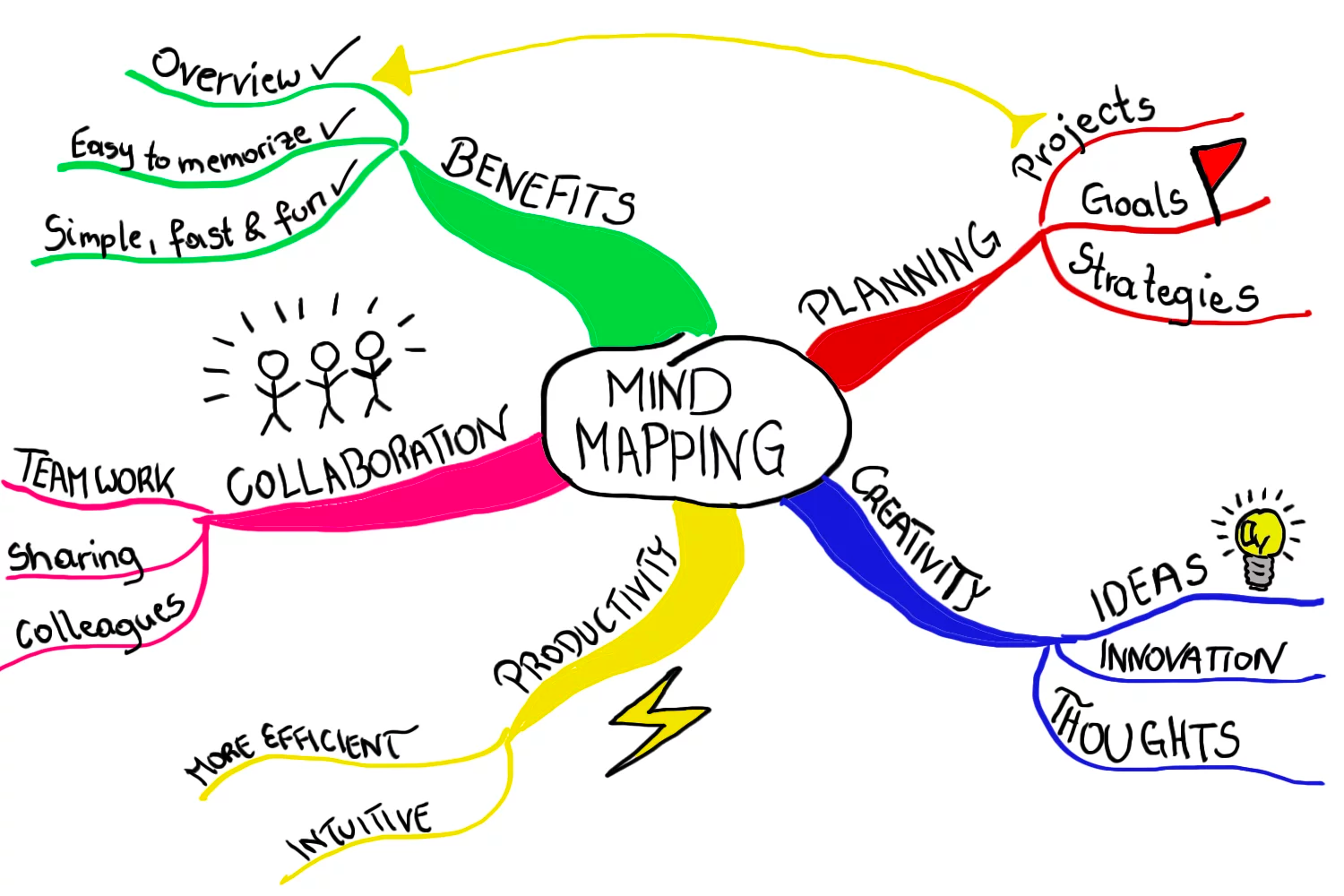
Education experts say using mind maps is a powerful learning technique that helps students organize information and understand topics more clearly. Mind maps are visual diagrams that show how ideas are connected to a main topic.
Many students find it difficult to study long chapters with lots of information. Experts explain that mind maps help break down complex topics into simple and connected ideas.
A mind map usually starts with a main idea in the center, with branches showing related points.
For students, this news matters because mind maps make studying easier and more interesting.
Experts recommend writing the main topic in the center of a page and drawing branches for subtopics.
Students can add keywords, short phrases, and small drawings to each branch.
Teachers encourage using colors to make mind maps more visually appealing and easier to remember.
Experts say visual learning helps the brain understand and recall information faster.
Students can use mind maps for subjects like science, history, and geography.
Mind maps are also useful for planning essays, projects, and presentations.
Parents can support this technique by encouraging children to create mind maps at home.
Experts recommend keeping mind maps simple and not overcrowding them with too much information.
Students should review their mind maps regularly during revision.
Teachers say mind maps help students see the “big picture” of a topic.
Experts emphasize that creating mind maps improves creativity and thinking skills.
Students who use mind maps often understand relationships between ideas more clearly.
Mind maps also make revision faster before exams.
Experts recommend combining mind maps with other study techniques such as summaries and practice questions.
Students can create digital mind maps using educational tools or draw them on paper.
Teachers encourage students to present their ideas using mind maps in class.
Experts say this method helps improve both memory and organization skills.
Students who practice mind mapping often feel more confident in their studies.
By using mind maps as a study tool, students can organize information clearly, understand topics more easily, and develop effective learning habits that support academic success.