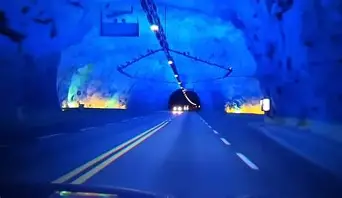
Imagine travelling through a huge mountain in just a few minutes instead of driving around it for hours. Imagine trains passing safely beneath busy cities or vehicles crossing under a river without using a bridge. These amazing achievements are made possible by tunnels. Tunnels are among the greatest engineering wonders ever built. They connect places that would otherwise be difficult to reach, making travel faster, safer, and more convenient. From underground metro systems to underwater road tunnels, these remarkable structures show how science and engineering can overcome nature’s greatest obstacles.
A tunnel is a long underground or underwater passage built for people, vehicles, trains, water, or even electricity and communication cables. Tunnels may pass through mountains, beneath rivers, under cities, or deep below the ground. They are carefully designed to withstand enormous pressure from the surrounding earth and water while remaining safe for thousands of people every day.
People have been building tunnels for thousands of years. Ancient civilizations dug simple tunnels to transport water from rivers to towns and farms. As engineering improved, tunnels were constructed for roads, railways, and mining. Today, modern tunnels are built using powerful machines, advanced computers, and sophisticated safety systems.
One of the most important machines used in tunnel construction is the Tunnel Boring Machine (TBM). This enormous machine, often as large as a multi-storey building, has a rotating cutting head equipped with powerful steel cutters. As it moves forward, it cuts through rock and soil while simultaneously placing strong concrete segments behind it to support the tunnel walls. This method makes tunnel construction faster, safer, and more accurate than traditional drilling methods.
Not all tunnels are the same. Road tunnels allow vehicles to pass through mountains or beneath cities. Railway tunnels help trains travel quickly across difficult landscapes. Metro tunnels carry underground trains that reduce traffic congestion in busy cities. Some tunnels transport drinking water, sewage, oil, natural gas, or even electrical cables. Each tunnel is specially designed according to its purpose and the surrounding environment.
Safety is a top priority in tunnel engineering. Modern tunnels are equipped with ventilation systems that supply fresh air and remove smoke or harmful gases. Bright lighting helps drivers and passengers see clearly, while emergency exits, fire detection systems, surveillance cameras, and communication equipment ensure that help is available if needed. Engineers regularly inspect tunnels to ensure they remain safe and secure.
Some tunnels are among the greatest engineering achievements in the world. The Channel Tunnel, often called the Chunnel, connects England and France beneath the English Channel. It allows high-speed trains to travel between the two countries without using ships. Another remarkable example is the Gotthard Base Tunnel in Switzerland, the world’s longest railway tunnel, stretching over 57 kilometres through the Alps. These projects required years of planning, advanced technology, and the dedication of thousands of engineers and workers.
India has also built many impressive tunnels. The Atal Tunnel in Himachal Pradesh is one of the world’s longest highway tunnels located at a high altitude. It has significantly reduced travel time between remote regions and provides year-round connectivity even during heavy snowfall. Such projects improve transportation, boost tourism, and support economic development.
Tunnel construction also helps protect the environment in some situations. Instead of cutting roads across forests or mountains, tunnels reduce disturbance to wildlife habitats and preserve natural landscapes. Underground metro systems reduce road traffic, fuel consumption, and air pollution, making cities cleaner and more sustainable.
Building a tunnel requires teamwork from many professionals. Civil engineers, geologists, architects, surveyors, environmental scientists, electricians, safety experts, and construction workers all contribute their knowledge and skills. Before digging begins, geologists study the rocks and soil to understand ground conditions. Engineers then design the tunnel to withstand earthquakes, water pressure, and heavy traffic for many decades.
Children who enjoy mathematics, science, engineering, and geography may one day help design tunnels, bridges, railways, and other major infrastructure projects. Careers in civil engineering, geology, construction management, environmental science, and transportation planning offer exciting opportunities to improve the way people travel and live.
Tunnels also teach an important life lesson. Sometimes the shortest path to success is not around an obstacle but through it. Just as engineers carefully plan and work step by step to build a tunnel through a mountain, people overcome life’s challenges through patience, determination, and teamwork. Every obstacle can become an opportunity when approached with knowledge and perseverance.
As the famous inventor Thomas Edison wisely said, “The value of an idea lies in the using of it.” Tunnels are powerful examples of how scientific ideas become practical solutions that improve millions of lives. They connect communities, reduce travel time, support trade, and make transportation safer and more efficient. By learning about tunnel engineering, children discover how human creativity, science, and teamwork can overcome even the greatest natural barriers. Every tunnel is more than just a passage through rock—it is a symbol of progress, determination, and the endless possibilities of human innovation.