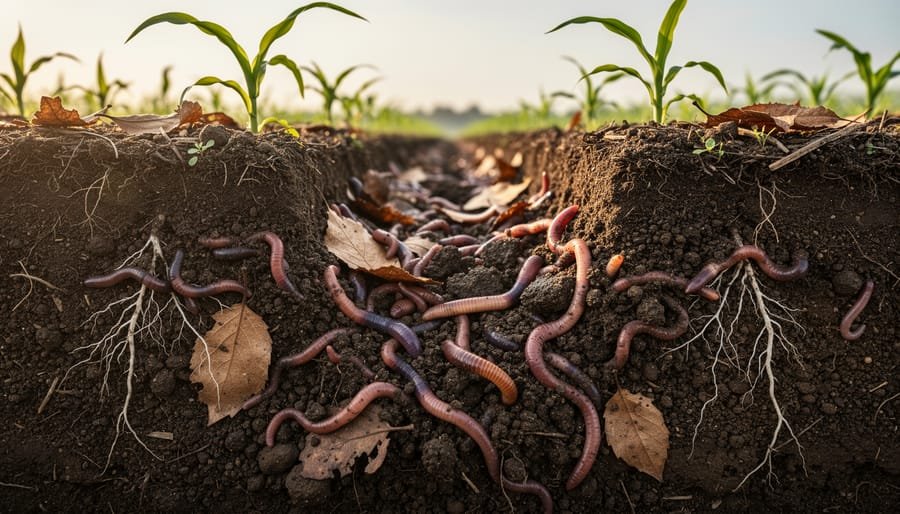
When children see an earthworm in the soil after rain, they may think it is just a small, harmless creature. However, earthworms are among the most important animals on Earth. These tiny underground workers play a huge role in keeping the soil healthy, helping plants grow, and supporting agriculture. Farmers and scientists often call earthworms “Nature’s Farmers” because they improve the quality of the soil without using machines or chemicals. Although they spend their lives hidden beneath the ground, their contribution to nature is truly remarkable.
Earthworms belong to a group of animals called annelids, which means they have long, soft bodies divided into many small segments. They do not have bones, legs, eyes, or ears, yet they are perfectly adapted for life underground. Their bodies are covered with a thin layer of moisture that helps them breathe through their skin. This is why earthworms prefer cool, damp soil and often come to the surface after heavy rain.
An earthworm spends most of its life digging tunnels through the soil. As it moves, it swallows small amounts of soil mixed with dead leaves, tiny plants, and other organic matter. Inside the worm’s body, this material is broken down and digested. The waste released by the earthworm, called worm castings, is one of the richest natural fertilizers found in nature. These castings contain nutrients that help plants grow healthier and stronger.
The tunnels made by earthworms are equally important. They loosen the soil, allowing air and water to reach plant roots more easily. This process, called soil aeration, helps roots grow deeper and absorb more nutrients. Loose soil also allows rainwater to soak into the ground instead of running off the surface, reducing soil erosion and improving water conservation.
Earthworms are essential for composting. Composting is the natural process of turning kitchen waste, dry leaves, and garden waste into nutrient-rich compost. Some special species of earthworms are used in vermicomposting, where they quickly convert organic waste into high-quality natural fertilizer. This compost improves soil fertility, reduces waste, and supports environmentally friendly farming.
Farmers value earthworms because healthy soil usually contains many of them. The presence of earthworms is often a sign that the soil is rich in organic matter and free from excessive pollution. Fields with abundant earthworms generally produce healthier crops because the soil remains fertile and well-aerated.
Earthworms also play an important role in the food chain. Birds, frogs, turtles, hedgehogs, and many other animals depend on earthworms as a source of food. By supporting both plants and animals, earthworms help maintain the balance of ecosystems.
Unfortunately, earthworm populations can decline due to excessive use of chemical pesticides, pollution, and loss of healthy soil. Protecting soil, reducing harmful chemicals, and encouraging organic farming help create better conditions for these valuable creatures. Even small home gardens benefit when earthworms are present.
Children can observe earthworms safely in school gardens or after rainfall. Gardening, composting, and planting trees help them understand the importance of healthy soil and the role of earthworms in nature. These simple activities encourage respect for all living creatures, no matter how small they may seem.
As the famous naturalist Charles Darwin wrote, “It may be doubted whether there are many other animals which have played so important a part in the history of the world as these lowly organized creatures.” Earthworms remind us that even the smallest living beings can make a huge difference. They quietly work beneath our feet every day, improving the soil that grows our food and supports life on Earth. By learning about earthworms, children discover that caring for nature begins with understanding and appreciating every creature, no matter how tiny it may be.