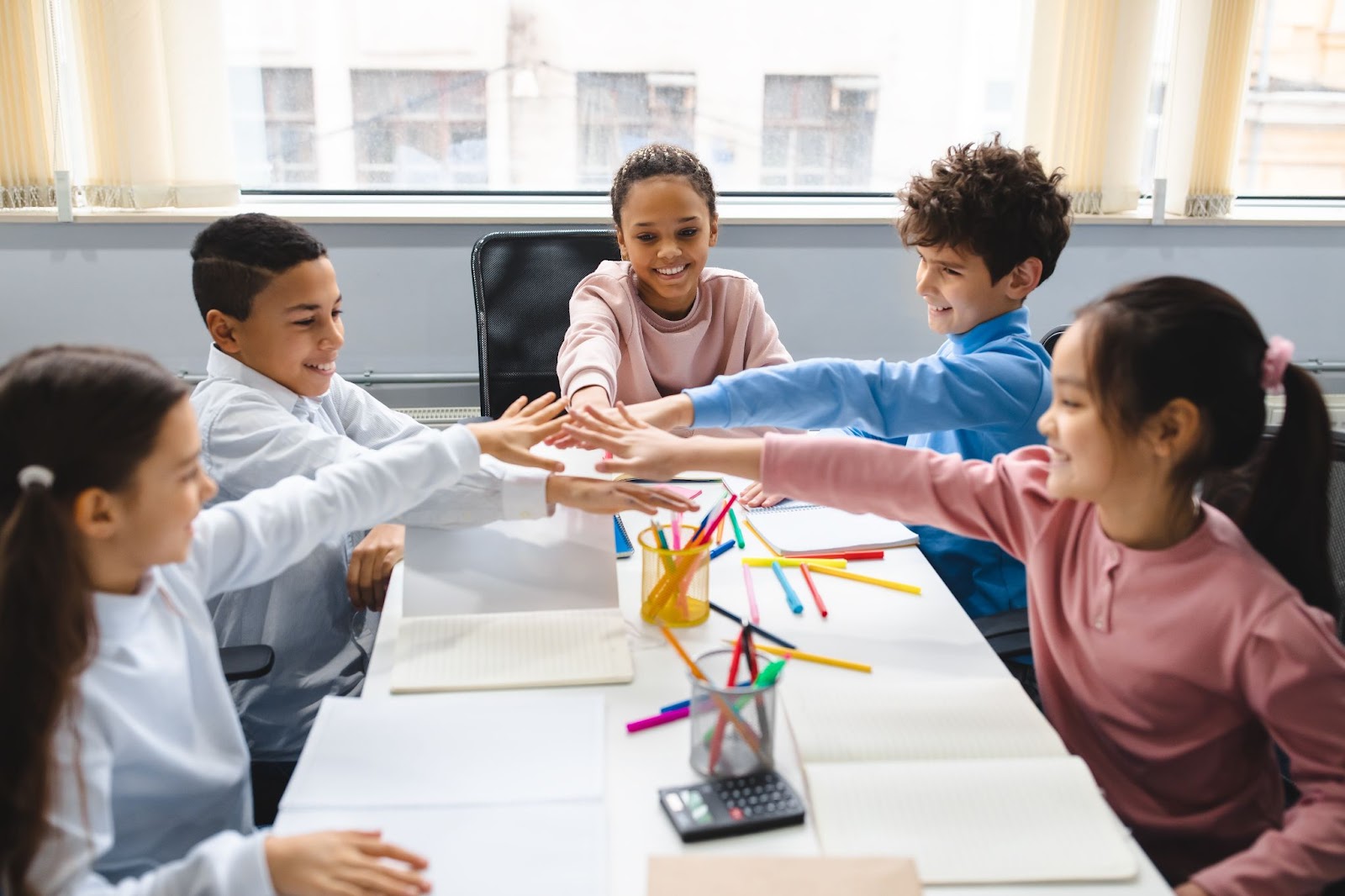
Learning to work in teams is an important habit that helps students build cooperation, leadership, and communication skills. Teamwork teaches students how to work together respectfully to achieve common goals.
Many students prefer working alone and may find it difficult to share ideas or responsibilities with others. This can reduce cooperation and social understanding.
When students learn teamwork, they become more supportive and confident.
For students, this matters because cooperation improves learning and problem-solving abilities.
Students can participate in group projects, sports, and classroom activities together.
They can share ideas, listen to others, and complete tasks as a team.
This helps in building trust and understanding.
Teachers encourage students to participate in teamwork activities regularly.
Working in teams improves communication and leadership skills.
Students who follow this habit often become more confident and responsible.
Parents can support this by encouraging children to play and work cooperatively with others.
Students should avoid arguing or ignoring teammates during activities.
This helps in creating a positive and respectful environment.
Teachers say teamwork teaches patience and responsibility.
Students can help weaker teammates and appreciate everyone’s efforts.
This helps in improving kindness and cooperation.
Learning to work in teams also teaches problem-solving and decision-making skills.
Students who follow this habit often feel happier and more connected with friends.
This habit improves discipline and emotional understanding.
Students can make teamwork part of their daily school activities.
Teachers encourage collaborative learning and leadership development.
This method helps students become caring and capable individuals.
Strong teamwork creates better friendships and successful group achievements.
Students who work well in teams regularly often inspire others too.
Small acts of cooperation can create big success.
By learning to work in teams, students can build cooperation, improve leadership skills, and develop habits that support personal growth and positive social relationships.