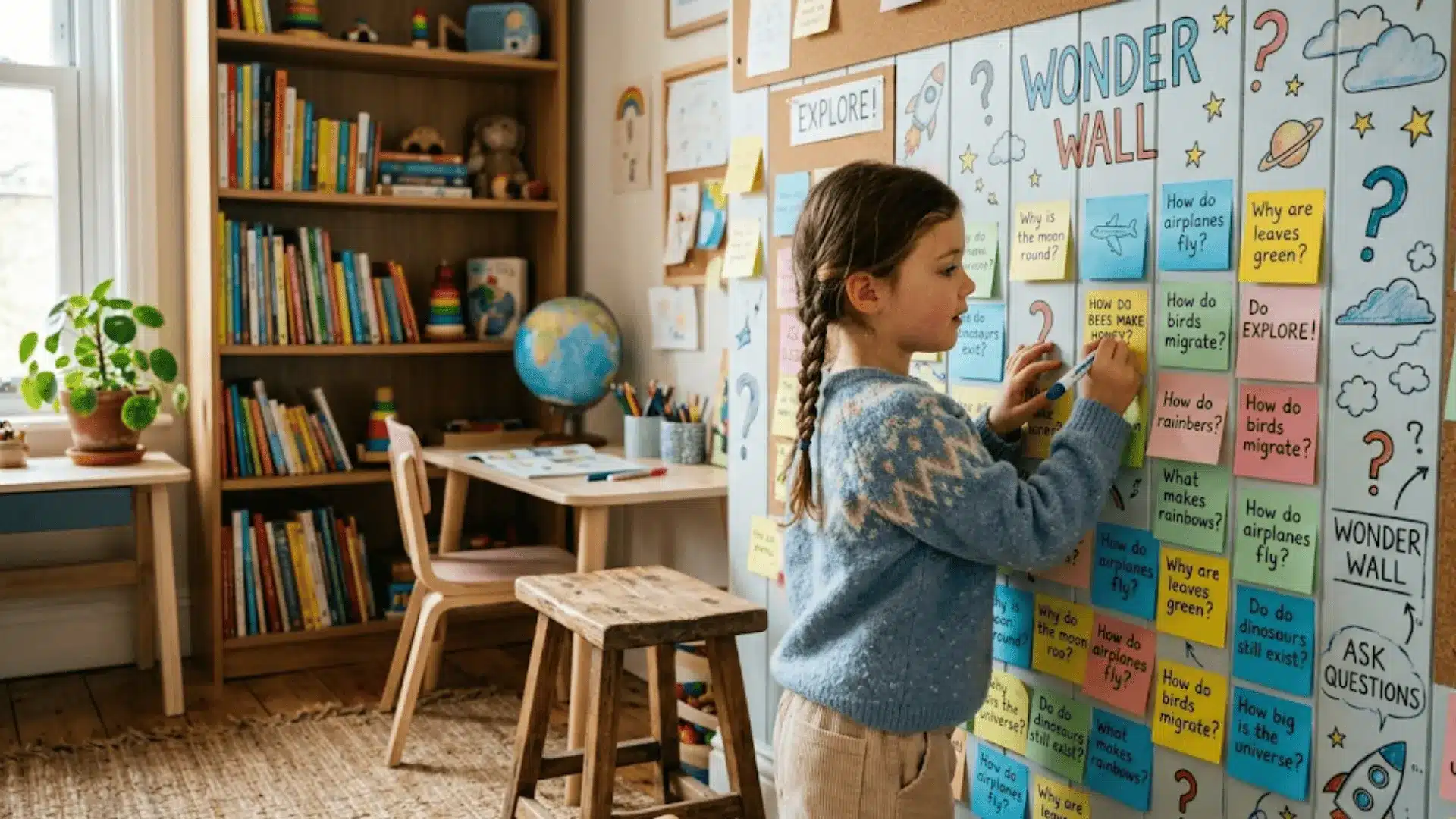
Every great discovery in history began with a simple question: “Why?” or “How?” Curiosity is the desire to learn, explore, and understand the world around us. It is one of the most valuable qualities a child can possess because it drives learning, creativity, and innovation. A curious child does not simply accept information; they seek answers, experiment with ideas, and continuously expand their knowledge.
Children are naturally curious from a young age. They ask countless questions about the sky, plants, animals, machines, and people. While these questions may sometimes seem endless, they are signs of a healthy and active mind. Instead of discouraging children from asking questions, parents and teachers should encourage them to explore and discover answers. Every question asked is an opportunity for learning.
Curiosity plays a major role in academic success. Students who are eager to learn often pay greater attention in class, participate in discussions, and enjoy exploring subjects beyond their textbooks. They are more likely to read books, conduct experiments, visit libraries, and search for reliable information. This habit helps them develop a deeper understanding of concepts rather than simply memorizing facts for examinations.
Science is one of the best examples of curiosity in action. Famous scientists such as Isaac Newton, Marie Curie, and Dr. A.P.J. Abdul Kalam achieved remarkable success because they were driven by curiosity. They observed the world carefully, asked questions, and searched for solutions that changed the course of history. Their journeys remind us that curiosity is the first step toward innovation and progress.
Curiosity also develops critical thinking and problem-solving skills. Instead of accepting things at face value, curious children learn to analyse situations, compare ideas, and make informed decisions. Whether solving a mathematics problem, designing a science project, or finding a creative solution to a real-life challenge, curiosity encourages independent thinking and confidence.
Learning does not happen only inside classrooms. Museums, science centres, parks, libraries, historical monuments, and nature trails provide exciting opportunities for children to explore and ask questions. Watching documentaries, conducting simple experiments at home, or building small models also helps satisfy a child’s natural desire to learn. These experiences make education enjoyable and meaningful.
Parents can nurture curiosity by listening patiently to their children’s questions and encouraging them to investigate answers together. Instead of immediately giving every answer, adults can ask questions such as, “What do you think?” or “How can we find out?” This approach develops independent thinking and research skills. Celebrating curiosity rather than dismissing it helps children become confident learners.
Schools also play an important role in creating a culture of inquiry. Teachers can encourage students to participate in science fairs, debates, quizzes, project-based learning, and classroom discussions. Providing opportunities for experimentation and exploration inspires children to think creatively and develop a lifelong love for learning.
In today’s rapidly changing world, curiosity is more valuable than ever. New technologies, scientific discoveries, and global challenges require people who are willing to learn continuously and adapt to change. Curiosity prepares children not only for successful careers but also for meaningful lives filled with exploration, creativity, and innovation.
As Albert Einstein wisely said, “I have no special talents. I am only passionately curious.” Every question a child asks is the beginning of a new journey of discovery. By encouraging curiosity, we inspire children to become lifelong learners, creative thinkers, and future innovators who will shape a better world for everyone.