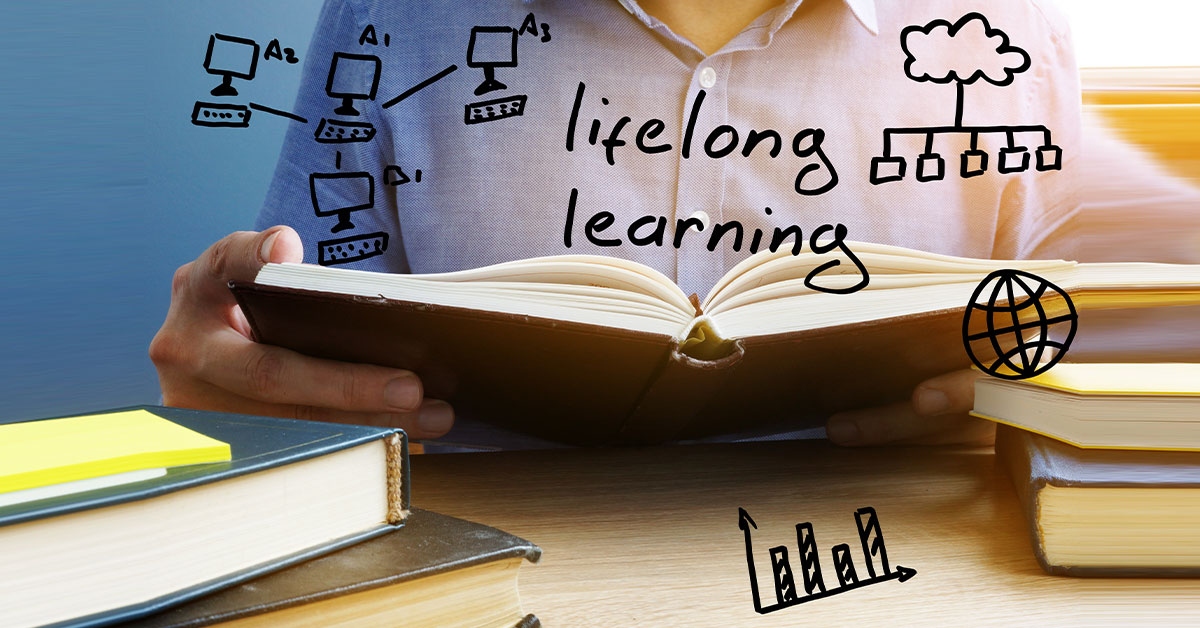
Learning does not end when the school bell rings or when a person graduates from college. In today’s rapidly changing world, new discoveries, technologies, and ideas emerge every day. The most successful people are those who continue learning throughout their lives. Teaching children the value of lifelong learning helps them remain curious, adaptable, and prepared for the opportunities and challenges of the future.
School provides children with the foundation of knowledge, but true education goes far beyond textbooks. Every experience, every book, every conversation, and every challenge teaches us something new. A child who develops the habit of learning continuously will always find ways to grow, improve, and succeed.
One of the most important qualities of a lifelong learner is curiosity. Curious children ask questions, explore new ideas, and enjoy discovering how things work. They read books beyond their school syllabus, watch educational documentaries, visit museums, conduct simple experiments, and seek answers to their questions. This curiosity keeps their minds active and inspires creativity.
Reading plays a major role in lifelong learning. Books, newspapers, magazines, and educational websites introduce children to new ideas, cultures, scientific discoveries, and inspiring personalities. Reading regularly improves knowledge, vocabulary, imagination, and critical thinking. It also develops the habit of learning independently, which is essential in adulthood.
Technology has made learning more accessible than ever before. Children can attend online courses, watch educational videos, participate in virtual science experiments, and learn new languages from experts around the world. However, they should also learn to use technology wisely by choosing reliable sources and balancing screen time with practical experiences and face-to-face interactions.
Learning from others is another valuable aspect of lifelong education. Parents, teachers, grandparents, friends, and community members all possess unique knowledge and experiences. Listening to their stories, asking questions, and respecting their wisdom help children understand that learning can happen anywhere—not only inside a classroom.
Mistakes should also be viewed as opportunities to learn. Children who are not afraid to make mistakes become more confident in trying new things. Whether they fail in an examination, lose a competition, or make an error during a project, every experience teaches valuable lessons that contribute to personal growth. Lifelong learners see challenges as opportunities rather than obstacles.
Parents and teachers can encourage continuous learning by appreciating curiosity instead of focusing only on marks. Visiting libraries, science centres, historical monuments, nature parks, and educational exhibitions exposes children to practical learning experiences. Encouraging hobbies such as reading, coding, music, gardening, photography, or robotics also helps children develop new skills and discover hidden talents.
In the future, many careers will require skills that do not yet exist today. Therefore, the ability to learn, adapt, and improve will become more valuable than simply memorizing information. Children who enjoy learning will be better prepared to embrace new technologies, solve complex problems, and contribute positively to society.
Lifelong learning also makes life more meaningful. It keeps the mind active, builds confidence, encourages creativity, and helps people remain informed and engaged with the world around them. No matter how old we become, there is always something new to learn, explore, and achieve.
As the great scientist Albert Einstein said, “Once you stop learning, you start dying.” By encouraging children to remain curious, embrace new experiences, and never stop asking questions, we prepare them for a lifetime of growth and success. A child who becomes a lifelong learner today will become an informed, adaptable, and inspiring leader tomorrow.