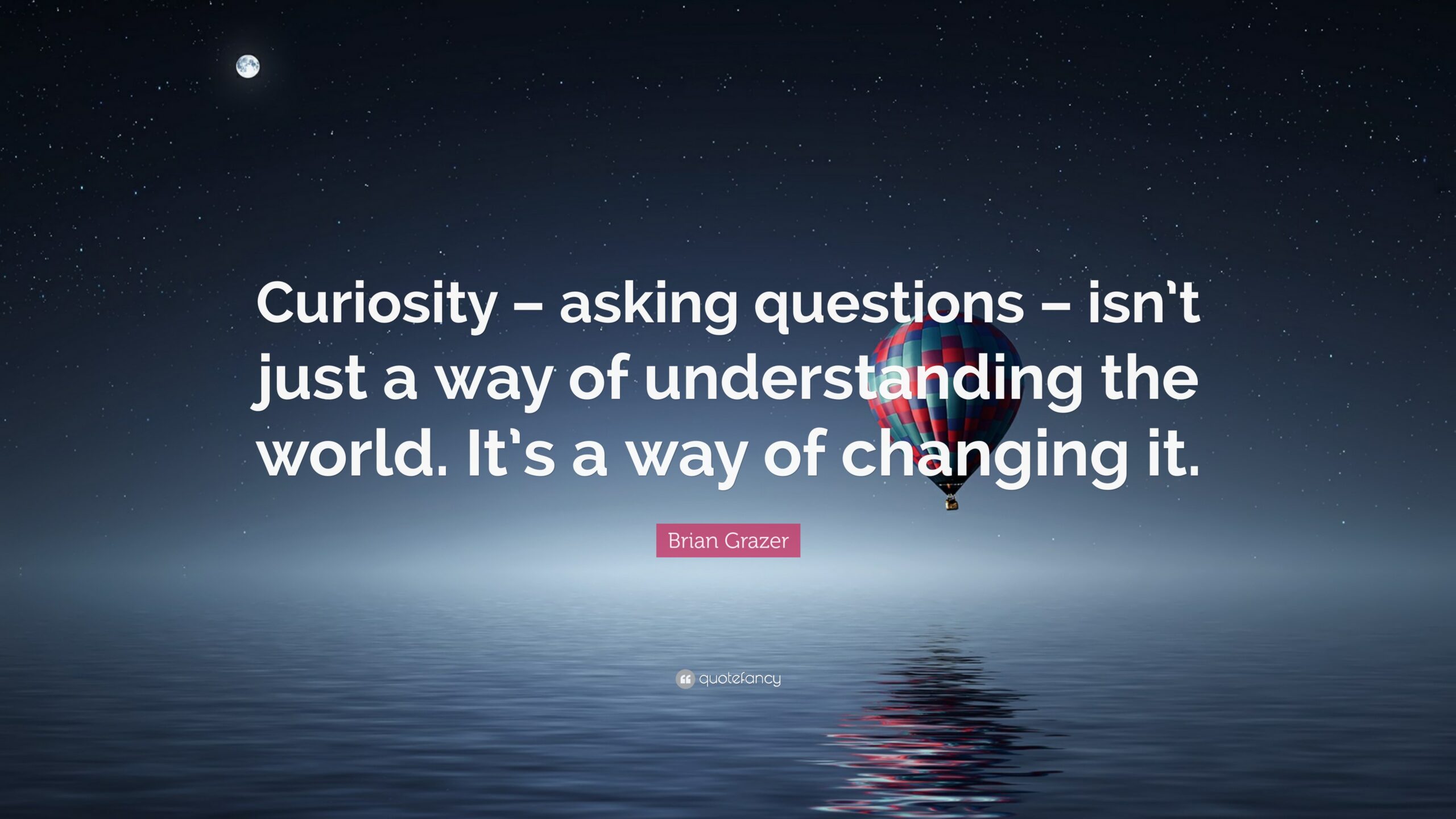
Children are naturally curious. From a very young age, they ask questions like, “Why is the sky blue?”, “How do birds fly?”, or “Where does rain come from?” These simple questions reflect a child’s desire to understand the world around them. Curiosity is the foundation of learning, and encouraging children to ask questions helps them become confident, creative, and lifelong learners.
Asking questions is one of the best ways to gain knowledge. Every invention, scientific discovery, and great achievement began with someone asking a simple question. Scientists, inventors, doctors, engineers, and explorers all started their journeys by wondering how things work and searching for answers. Children who are encouraged to ask questions develop the confidence to think independently and solve problems.
Curiosity makes learning enjoyable. Instead of memorizing facts only to pass examinations, curious children want to understand the reasons behind concepts. For example, rather than simply learning that plants need sunlight, they may ask how sunlight helps plants grow. This deeper understanding makes education more meaningful and memorable.
Questioning also develops critical thinking. Children learn not to accept every piece of information without understanding it. They compare ideas, analyse facts, and look for evidence before forming conclusions. These skills are essential in today’s world, where information is available from many different sources. Critical thinking helps children distinguish between facts, opinions, and misinformation.
Parents have an important role in nurturing curiosity. Instead of dismissing children’s questions as unimportant, they should encourage discussions and explore answers together. If they do not know the answer, they can search for information in books, reliable websites, or educational videos. This teaches children that learning is a lifelong process and that even adults continue to learn every day.
Teachers also play a vital role in creating classrooms where questions are welcomed. Students should feel comfortable asking for clarification without fear of embarrassment. Interactive lessons, science experiments, group discussions, and project-based learning encourage children to think deeply and express their ideas confidently. A classroom where questions are appreciated becomes a place of exploration and innovation.
Reading is another excellent way to satisfy curiosity. Books, newspapers, magazines, and educational journals introduce children to fascinating topics beyond the classroom. Visiting museums, science centres, zoos, botanical gardens, and historical monuments also inspires children to ask new questions and discover the answers through observation and experience.
Curiosity encourages creativity as well. Children who ask questions often imagine new possibilities and think of unique solutions to problems. They may invent games, design models, create artwork, or develop innovative ideas that improve everyday life. Creativity and curiosity together prepare children for future careers that require innovation and adaptability.
In today’s rapidly changing world, the ability to learn continuously is more important than memorizing information. Technology evolves, new discoveries are made, and careers change over time. Curious children are better prepared to adapt because they enjoy learning new skills and exploring unfamiliar ideas. Their willingness to ask questions helps them remain confident in the face of change.
As the famous educator Paulo Freire said, “Curiosity is the beginning of knowledge.” By encouraging children to ask questions, explore new ideas, and seek answers with enthusiasm, we help them become independent thinkers and lifelong learners. Every question opens a new door to discovery, and every answer leads to even greater curiosity. A child who never stops asking questions will never stop learning, and that lifelong love for knowledge is one of the greatest gifts we can give the next generation.