The world is constantly changing because of new ideas and inventions. Every modern convenience we enjoy today—from electricity and computers to the internet and medical discoveries—was once just an idea in someone’s mind. Innovation is the ability to create new ideas or improve existing ones to solve problems and make life better. Encouraging innovation in children helps them become creative thinkers, confident problem-solvers, and future leaders.
Innovation begins with curiosity. Children naturally ask questions such as, “Why does this happen?” or “Can there be a better way?” These questions are the starting point of every invention. Instead of discouraging children from asking questions, parents and teachers should encourage them to explore, experiment, and discover answers. A curious mind is the foundation of an innovative mind.
Innovation is not limited to science or technology. A child can be innovative by creating a new game, writing an original story, designing an art project, improving a classroom activity, or finding a smarter way to organize schoolwork. Innovation is about thinking differently and looking for better solutions in everyday life.
One of the most important qualities of an innovator is the willingness to experiment. Not every idea succeeds on the first attempt. Many famous inventors experienced countless failures before achieving success. Thomas Edison tested thousands of materials before inventing the practical electric bulb. Dr. A.P.J. Abdul Kalam faced many challenges before contributing to India’s space and missile programmes. Their journeys teach children that persistence is more important than immediate success.
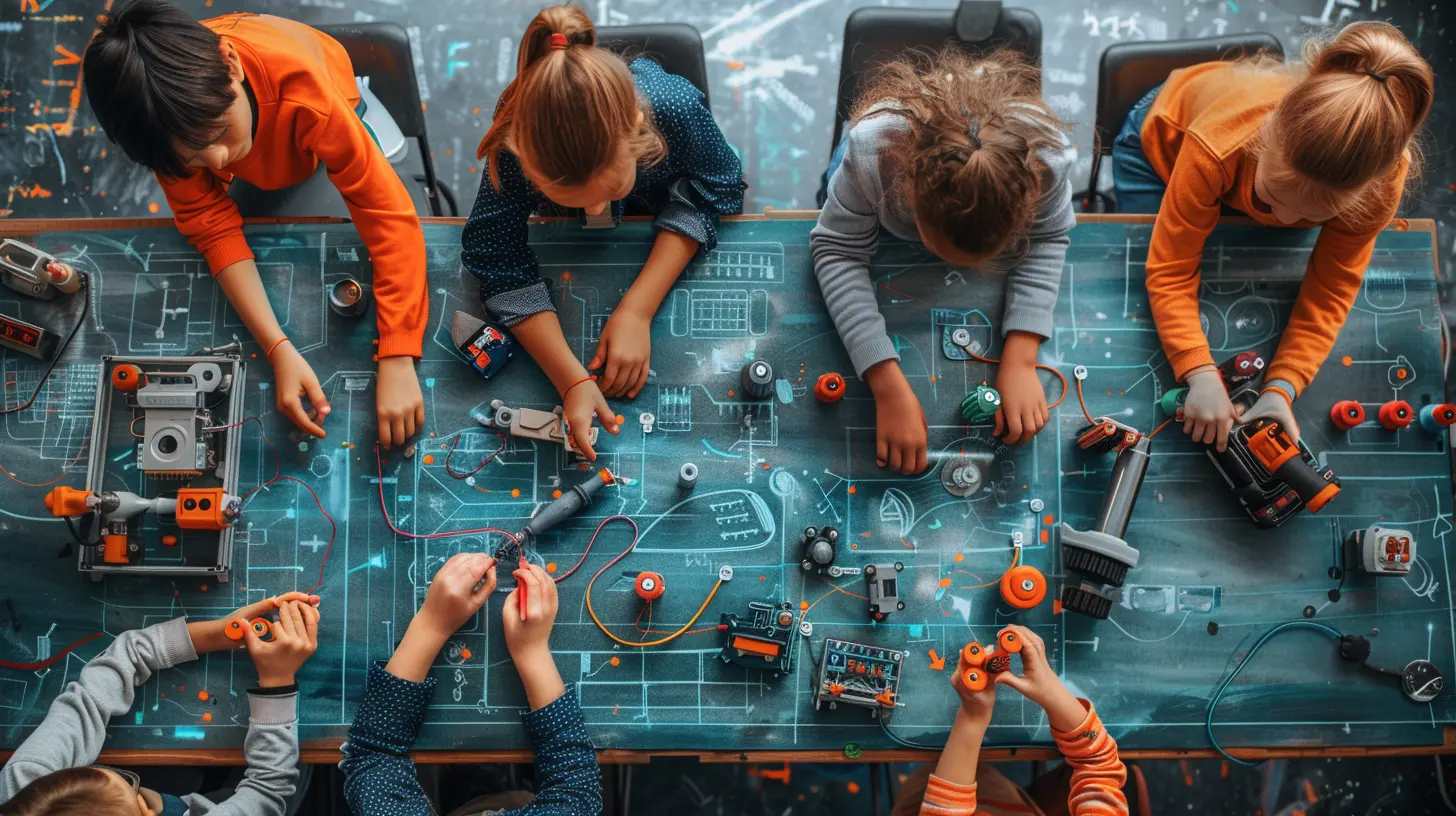
Schools play a vital role in developing innovative thinking. Science fairs, robotics clubs, coding workshops, model-making competitions, and project-based learning encourage students to solve real-life problems creatively. Instead of memorizing answers, children should be encouraged to ask questions, test ideas, and learn through experimentation.
Parents can also nurture innovation at home by providing opportunities for exploration. Building models with blocks, solving puzzles, conducting simple science experiments, gardening, cooking, or creating craft projects encourage children to think independently. Most importantly, parents should appreciate effort and creativity rather than expecting perfect results. Every new idea deserves encouragement.
Innovation also teaches children to work together. Many great inventions are the result of teamwork, where people with different skills combine their knowledge to create something meaningful. Group activities help children share ideas, respect different opinions, and understand that collaboration often leads to better solutions.
Technology has made innovation more accessible than ever before. Children can learn coding, robotics, artificial intelligence, animation, and digital design using educational platforms. However, technology should be used as a tool for creating and learning rather than only for entertainment. The goal is to inspire children to become creators of technology, not just consumers of it.
Innovation also develops resilience. Every unsuccessful attempt provides valuable lessons that help improve the next idea. Children learn that mistakes are not failures but opportunities to discover what works and what does not. This mindset builds confidence and prepares them to face future challenges with determination.
The future will belong to people who can think creatively, solve problems, and adapt to change. By encouraging innovation, we prepare children to contribute to society through new ideas, improved technologies, and creative solutions that make life better for everyone.
As Steve Jobs wisely said, “Innovation distinguishes between a leader and a follower.” By inspiring children to imagine, explore, experiment, and never stop asking “What if?”, we help them unlock their true potential. Every great invention begins with a simple idea, and every child has the ability to develop ideas that can shape a brighter future for the world.