Imagine drawing a toy on a computer and watching it become a real object right before your eyes. It may sound like magic, but it is actually made possible by an incredible technology called 3D printing. Also known as additive manufacturing, 3D printing allows people to create three-dimensional objects from digital designs by adding material one layer at a time. This revolutionary technology is changing the fields of education, medicine, engineering, architecture, fashion, and even space exploration. For children, learning about 3D printing opens the door to a future filled with creativity, innovation, and endless possibilities.
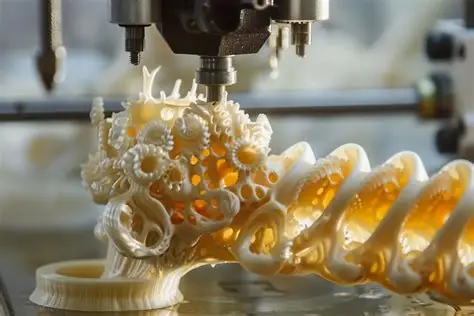
Unlike traditional manufacturing, which often involves cutting, drilling, or shaping materials, 3D printing works by building objects layer by layer. A computer first creates a digital model of the object using special design software. This design is then sent to a 3D printer, which carefully deposits thin layers of material until the entire object is completed. The process may take a few minutes or several hours, depending on the size and complexity of the design.
Most 3D printers use materials such as plastic, resin, metal, or biodegradable substances. Educational 3D printers often use a plastic filament that is heated until it melts and is then carefully placed in precise layers. As each layer cools, it joins with the previous one, gradually forming the final object. This method allows highly detailed models to be created with remarkable accuracy.
One of the greatest advantages of 3D printing is its ability to turn ideas into reality quickly. Students can design scientific models, engineers can test new inventions, architects can create miniature buildings, and artists can produce unique sculptures. Instead of imagining how something might look, people can hold a physical model in their hands and make improvements before producing the final version.
Education has greatly benefited from 3D printing. Teachers can print models of the human heart, the solar system, historical monuments, mathematical shapes, and scientific equipment. These models make learning more interactive and enjoyable because students can see and touch concepts that are usually explained only through pictures in textbooks. Hands-on learning helps improve understanding and encourages curiosity.
In medicine, 3D printing is transforming healthcare in remarkable ways. Doctors use 3D-printed models of organs to plan complex surgeries before operating on patients. Scientists are creating customized artificial limbs, dental implants, hearing aids, and medical devices designed specifically for individual patients. Researchers are even studying ways to print human tissues that may one day help treat serious injuries and diseases. Although this research is still developing, it has the potential to improve millions of lives.
Engineers use 3D printing to create prototypes of machines, vehicles, and electronic devices. Instead of waiting weeks for a factory to manufacture a part, engineers can print a model within hours and test it immediately. This saves time, reduces costs, and encourages innovation. Automobile manufacturers, aerospace companies, and technology firms use 3D printing to design lighter, stronger, and more efficient products.
The construction industry is also exploring this exciting technology. Special 3D printers can build parts of houses and buildings using concrete and other construction materials. Some homes have already been constructed using large-scale 3D printers, reducing construction time and material waste. In the future, this technology may help provide affordable housing in many parts of the world.
Space agencies are also using 3D printing in remarkable ways. Astronauts aboard space stations can print tools and replacement parts whenever needed instead of waiting for supplies to arrive from Earth. Scientists are studying whether future astronauts could use 3D printers to build shelters on the Moon or Mars using local materials. Such innovations could make long-term space exploration more practical and sustainable.
3D printing also benefits the environment. Since objects are created by adding only the required material, there is often less waste compared to traditional manufacturing methods. Many companies are developing recyclable and biodegradable printing materials to make the technology even more environmentally friendly. Scientists continue to explore sustainable ways to use 3D printing while conserving natural resources.
Children can enjoy many educational activities using 3D printing. They can design keychains, puzzles, science models, geometric shapes, miniature vehicles, chess pieces, and artistic creations. Through these projects, students develop creativity, problem-solving skills, logical thinking, and patience. They also learn the importance of planning, testing, and improving their designs before printing the final product.
Parents and teachers can encourage children to explore 3D printing by introducing them to simple computer-aided design (CAD) software suitable for beginners. Visiting science museums, innovation centres, engineering exhibitions, or maker spaces gives children the opportunity to see 3D printers in action. Robotics clubs, STEM laboratories, and school innovation centres increasingly include 3D printing as part of their learning programmes.
As exciting as 3D printing is, it must also be used responsibly. Designers should respect copyright laws and avoid copying someone else’s work without permission. Materials should be used carefully to reduce waste, and printed objects should be created for useful, educational, or creative purposes. Technology should always be guided by ethics, responsibility, and concern for society.
The future of 3D printing is incredibly promising. Scientists are working on printing stronger buildings, lightweight aircraft parts, advanced medical implants, eco-friendly products, and even food. As the technology becomes faster and more affordable, it is expected to become a common tool in schools, hospitals, factories, and homes around the world. Children who learn about 3D printing today may become tomorrow’s inventors, engineers, architects, designers, and scientists.
As the famous inventor Leonardo da Vinci once said, “Learning never exhausts the mind.” The world of 3D printing reminds us that imagination, combined with science and technology, can transform ideas into reality. By encouraging children to explore design, engineering, and creativity, we prepare them to become innovators who solve real-world problems and improve the lives of others. Every great invention begins as an idea, and with the power of 3D printing, today’s ideas can become tomorrow’s extraordinary creations.