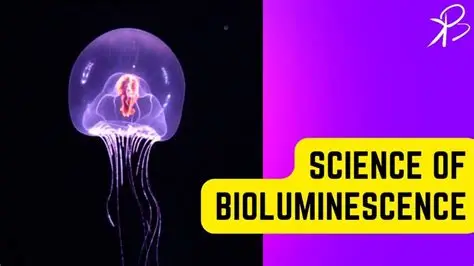
Imagine walking along a beach at night and seeing the waves glow with a beautiful blue light, or watching tiny insects light up a dark forest like twinkling stars. It may seem like magic, but it is actually a fascinating natural phenomenon called bioluminescence. Bioluminescence is the ability of certain living organisms to produce and emit light. From the deepest parts of the oceans to tropical forests, nature has created its own living lights that amaze scientists and inspire people around the world.
The word bioluminescence comes from two words: “bio,” meaning life, and “luminescence,” meaning the production of light. Unlike a light bulb, which produces both light and heat, bioluminescent organisms create what scientists call “cold light.” Almost all the energy produced is converted into light, with very little heat being released. This makes bioluminescence one of the most efficient lighting systems found in nature.
Bioluminescence is produced through a chemical reaction inside the organism’s body. Two important substances are involved: luciferin, a light-producing chemical, and luciferase, an enzyme that speeds up the reaction. When luciferin combines with oxygen in the presence of luciferase, it produces light. Different organisms produce different colours, including blue, green, yellow, and sometimes red, depending on the chemicals involved.
One of the most familiar bioluminescent creatures is the firefly. On warm summer evenings, fireflies flash their tiny lights to communicate with one another, especially during the mating season. Each species has its own unique flashing pattern, helping fireflies identify members of their own kind. These natural light displays have fascinated children and scientists for generations.
The oceans are home to the greatest variety of bioluminescent organisms. Tiny marine plankton called dinoflagellates can make the sea glow bright blue when waves disturb the water. In the deep ocean, where sunlight cannot reach, many fish, jellyfish, squid, and shrimp produce their own light. Some use it to attract prey, others to confuse predators, and some to communicate with members of their species. The famous anglerfish uses a glowing lure hanging in front of its mouth to attract smaller fish before catching them.
Bioluminescence serves many important purposes in nature. Some animals use light for camouflage, matching the faint light coming from above so predators cannot easily see them. Others use flashing signals to find mates or warn enemies that they may be poisonous. In some cases, sudden bursts of light startle predators, giving the glowing animal enough time to escape.
Scientists are studying bioluminescence to improve medicine, environmental research, and biotechnology. Special glowing proteins obtained from marine organisms help researchers study diseases, observe living cells, and track the growth of harmful bacteria. Bioluminescent technology is also used in laboratories to test medicines and detect pollution in water and soil.
Children can explore the science of bioluminescence by learning about fireflies, visiting science museums, or watching educational documentaries about marine life. Although glowing organisms may appear magical, they remind us that nature often uses science in extraordinary ways. Understanding these natural wonders encourages curiosity about biology, chemistry, and environmental science.
Unfortunately, many bioluminescent species are threatened by pollution, habitat destruction, and climate change. Artificial lights in cities can also interfere with fireflies’ ability to communicate. Protecting forests, rivers, oceans, and wetlands helps preserve these fascinating creatures and the ecosystems they depend on.
As the famous naturalist Rachel Carson said, “Those who contemplate the beauty of the Earth find reserves of strength that will endure as long as life lasts.” Bioluminescence reminds us that nature is full of incredible surprises waiting to be discovered. The ability of tiny organisms to create their own light teaches us that even the smallest forms of life can perform extraordinary wonders. By studying and protecting these remarkable creatures, children learn to appreciate the beauty, diversity, and scientific marvels of the natural world. Every glowing firefly and every shining wave is a reminder that nature’s brilliance often appears in the most unexpected places.